 by
by When I shared a breakthrough with an executive who buys information, it showed how information flows through his business. It resonated. It’s opening doors to enterprise discussions. It showed him his information world in a new light.
The breakthrough came from one thing. Knowing when to turn off the computer and be comfortable with what I already know.
My process starts with the client’s cross functional team. We workshop who to test an idea with, and why. Agreeing the target customer and the idea isn’t always a given.
Then come the deep conversations. An hour of focused, critical thinking with the customer or prospect, sharing ideas as I hear them.
Then I go back over who I spoke with and organise by jobs. I call this the SubsNoun, a term I’d call trademarked for anyone with a trigger finger on the copy and paste button.
I’ve got research grade AI, and a context primed, enterprise version of Claude set up in a way that’s fairly unique. It orchestrates know how from Substribe’s expert network. None of it replaces the stuff I actually know.
What I know.
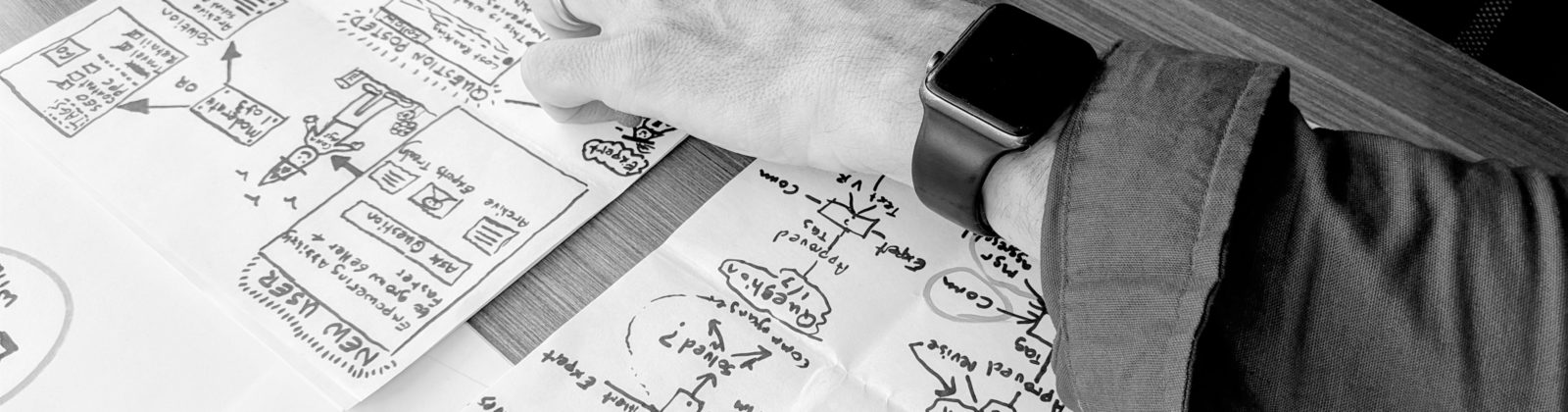
The thing that got me to the concept, the actual breakthrough, was a big roll of paper and a pen. And enough time to sketch out what I sensed.
Not because I need to get better at prompting. Because there are dots I join from 20 years leading teams in B2B information, data and networks. I join them across every brand I’ve supported at Substribe since 2018.
So I get to my vantage point first. Then I work with my tools to bring the findings together and test my thinking. It isn’t easy. I challenge myself along the way. The idea AI picks out isn’t the one that counts.
I used to work with someone who’d say, “that’s not what was said,” and “that’s not what the data says.” That’s the point, though, isn’t it? What makes discovery valuable isn’t doing what the computer says. It’s understanding how to solve a problem in a way that answers something meaningful and hard to articulate. If the customer could articulate it, they’d have solved it themselves.
How I bring it together.
I’ve built solutions and used them in real life. I run the cross functional workshops myself, so I stay in tune. I don’t rely on someone else’s read of the room.
I conduct the deep customer conversations myself. That means I build on ideas as I go, listening to what’s said and unsaid, the pauses, the hesitation. Then I ask what’s going on. And listen some more. I don’t hand interviews to someone else and wait for their notes back. Passing information between people always drops something.
I’ve done the job, built the frameworks, and applied them in live client work to diagnose, decide and act on the next lever worth pulling.
If you’ve read this far, back to the main thing that helped with the breakthrough. Knowing when to switch off the computer.
I’ll use a well known bit of cinema to make the point: the original Star Wars. The Death Star is a planet killer. Someone has to destroy it. Luke Skywalker flies a trench run along its surface, working out the angle to drop a weapon down a tiny exhaust port.
He’s staring at a glowing wireframe on his targeting computer, working out exactly when to pull the trigger. A bit like staring at Claude whirring away, ready to hand you an answer.
Then he reaches up and switches it off. His screen goes dark. Back at command, someone panics. His computer’s off. Over the comms, Luke doesn’t explain himself.
“Nothing. I’m all right.”
If you’ve got the experience and the expertise, you need to be confident about when to call on your own intelligence. Not get pulled in by anything that replicates the look of insight without the substance underneath it.
We’re increasingly trusting the screen without question. Generative AI, automated algorithms, data driven predictions, machine made shortcuts. The screen is efficient. It hands you a pre-calculated path. There’s a trade off. It shrinks your ability to actually hit the target.
For me, the breakthrough came from switching off the machine, clearing the noise, and trusting instinct, intuition and curiosity. Knowing when the computer is useful, and when to trust what you know, matters more than any prompt.
Substribe runs customer discovery sprints for B2B information and subscription businesses.
Common questions on AI and customer discovery
Should B2B subscription businesses use AI for customer discovery?
AI can organise interview notes, surface patterns across conversations and speed up the mechanical parts of research. It can’t replace the judgement built from sitting in the room, hearing the pause before an answer, and knowing which detail actually matters. Use it for the mechanical parts. Keep the diagnosis human.
What’s the risk of relying only on AI generated insight in customer research?
AI tends to surface what’s already been said, not what’s meant. It optimises for a plausible answer, not the uncomfortable one. Businesses that skip the human conversation risk mistaking a well phrased summary for a real diagnosis.
How does Substribe combine AI and human judgement in customer discovery?
Substribe runs cross functional workshops and in depth customer conversations first, then uses AI to organise and test the thinking, not to replace it. The method draws on 28 years of pattern recognition across B2B information, data and subscription businesses.
Want to make a breakthrough on customer value?
Switch off your computer, and get in touch. 30 minutes, no pitch, just diagnosis.
Related reading: Real Interviews First, AI Second · AgriConnect: Long Term Impact Of Customer Discovery · Wise up to Substech: five big talking points
More Substribe results and ideas.
Written by Andy Burden. Common questions section compiled by Andy Burden with the Substribe Claude project.
Discover more from Substribe | B2B Subscription and Membership Advisory
Subscribe to get the latest posts sent to your email.
Leave a Reply